
Science Meets Parliament 2018
Each year, Science and Technology Australia organises an event to raise the profile of Australian Science, Technology, Engineering and Mathematics. With an election on the horizon this year, it is more important than ever that we as scientists and researchers work to champion the research that we undertake on a day-to-day basis.
This year over 240 scientists & technologists met in Canberra over 2 days for professional development and a forum at parliament house. During the second day, delegates met privately in small groups of 3 – 5 with parliamentarians and attended a parliamentary forum with Liberal MP Karen Andrews, Labour MP Richard Marles and the Greens spokesperson for science, Adam Bandt MP.
Professional Development
This year, attendees received advice from Australia’s Chief Scientist, Alan Finkel on the importance of building relationships with parliamentarians. He encouraged us to consider Science Meets Parliament as a speed dating event that could enable long term relationships to be built with the parliamentarians that we meet. He advised us to “have rigour and integrity, be in it for the long haul, know communication is key, and keep up the maintenance and renovations” on our relationships with parliamentarians beyond the meeting in February.
The CSIRO CEO, Dr. Larry Marshall supported Dr. Finkel’s advice by suggesting that we play the long game “It isn’t about your agenda, it isn’t about your science — it’s about the national agenda to solve a national challenge.” The Scientific community is often poor at advocating for itself and research funding is unfortunately seen as a viable target for budget cuts when the economy is in decline. Part of our roles as researchers in Australia is to develop and promote solid research programs that actively work to solve real world problems and make life better. Larry said it well when he described why so many of us enter into science “We have a diversity of people here in the room, all united by a common passion: to make life better.” In order for us to be able to do the work we love and continue to explore how life works, we need to raise our voices to be heard collectively. In the public sphere, the political sphere and in our private spheres, as the public’s perception of the importance of science has an influence on the actions of our policy makers.
A final point from the public comments of parliamentarians that I would like to highlight, is that the leader of the opposition Bill Shorten MP committed to pushing for an increase in the science budget allocation from 1.8% to 3% of GDP if Labour is elected. The Greens have responded with a promise of 4% and the Liberals have promised to keep delivering their innovation agenda. These are of course only promises but it is rare for the leader of the opposition to make such bold statements in a public forum and reiterate them through their spokesperson. It is a promising sign for the future of science in Australia, one for which I continue to hold onto hope that we may one day see.
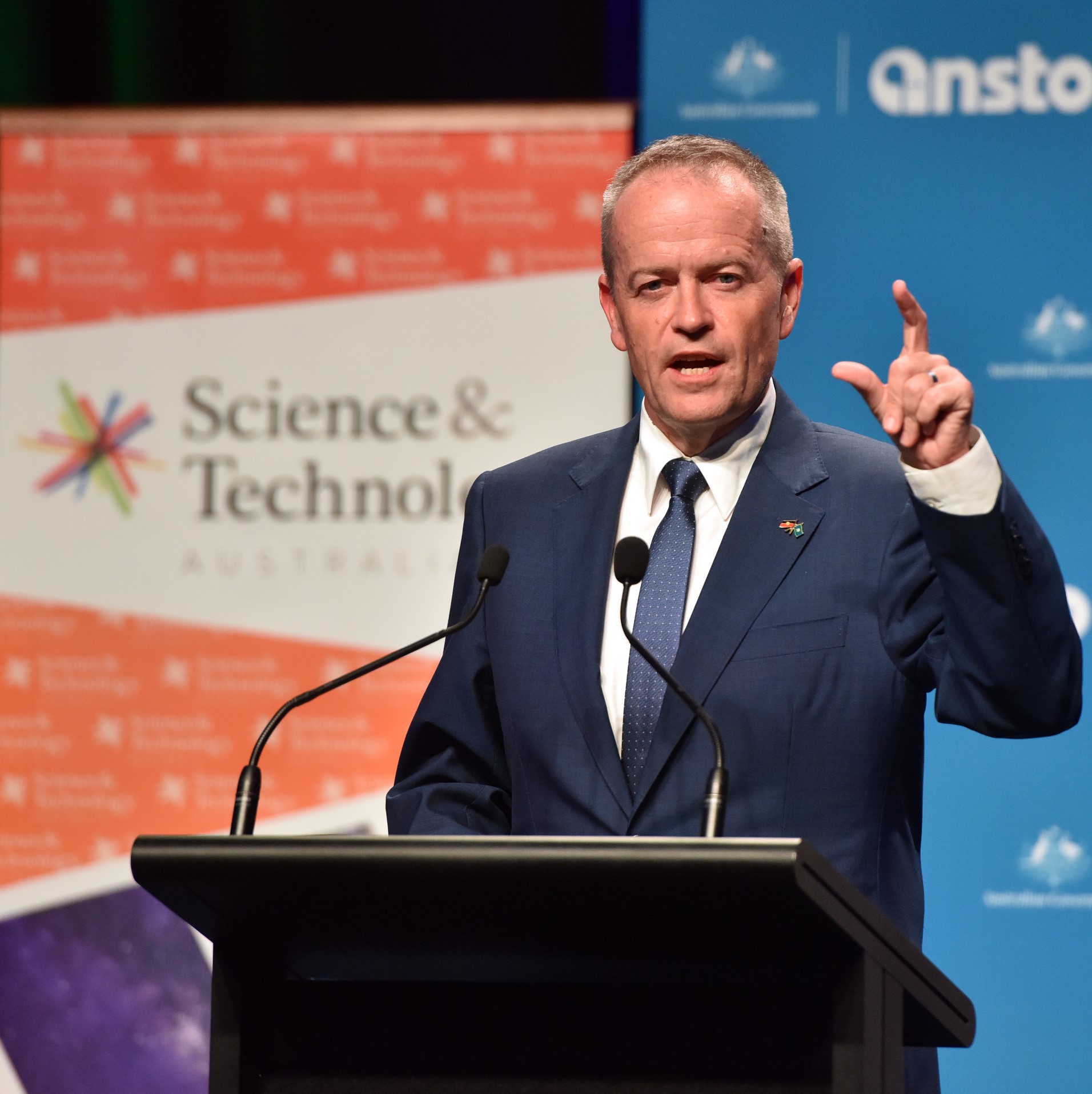
Opposition leader Bill Shorten at Science Meets Parliament gala dinner in the great hall, Parliament House, Canberra on 13th February, 2018. PHOTO: MARK GRAHAM
Defining the agenda
After deliberating with the ASBTE President Dr. Helmut Thissen, my mission as a representative for ASBTE was to raise two simple issues, which have a huge impact on the way that we do research. These issues were:
- Multidisciplinary research lacks a dedicated funding source.
- Mental health of researchers/academics and students is not managed well.
Interestingly, one of the first comments that Science and Technology Australia President Professor Emma Johnston made was that, “when meeting parliamentarians one should never ask for more money, as parliamentarians hear this all the time and it’s the best way to make sure you lose their attention.” This point was re-iterated several times throughout the professional development sessions. A second point that was well covered was that when meeting parliamentarians we need to remember that they have a lot on their plates, so keeping your ideas concise and direct is essential and presenting problems with potential solutions rather than problems alone is vital.
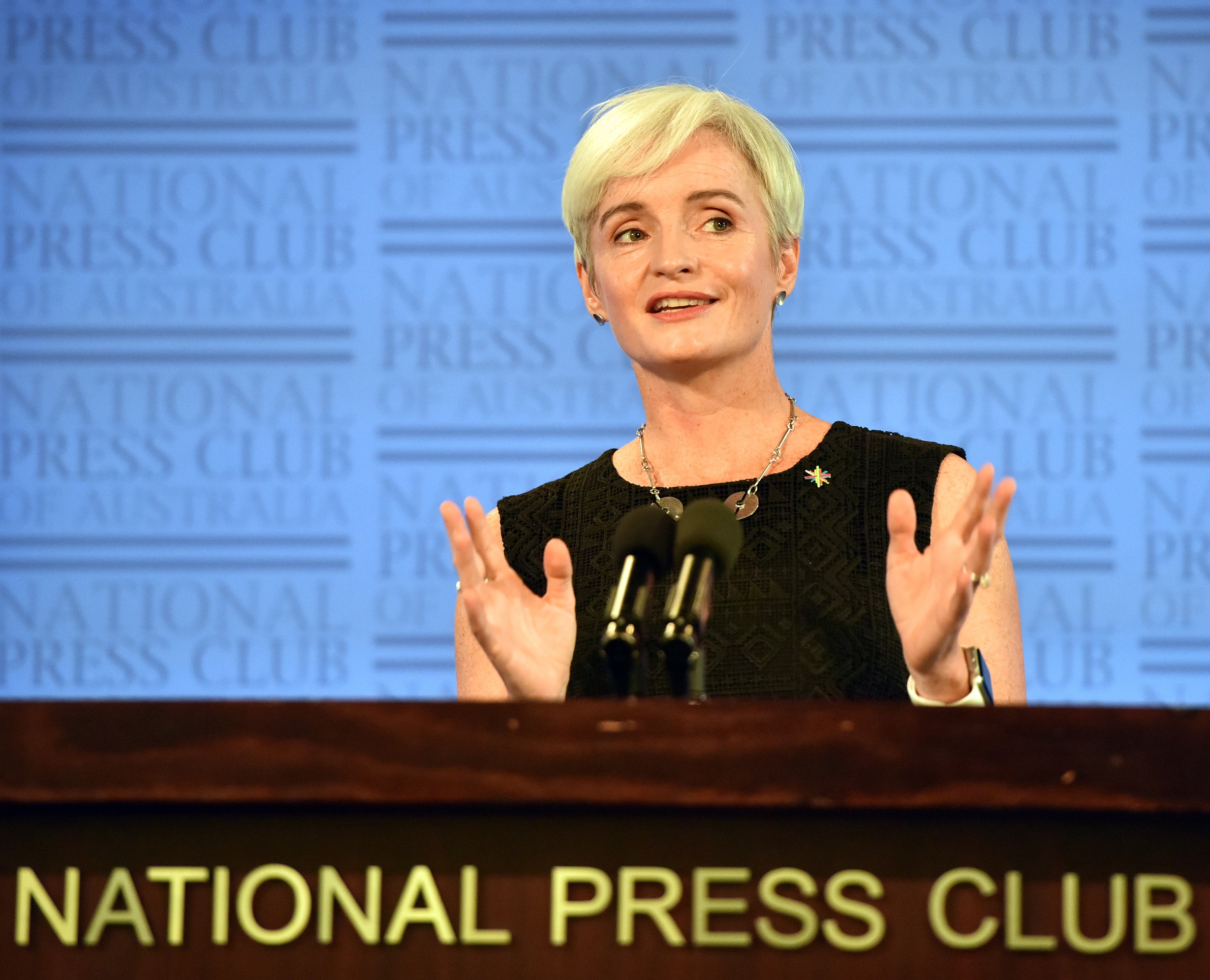
Science Technology Australia President Professor Emma Johnston speaking at a National Press Club event, Canberra on 14th February, 2018. PHOTO: MARK GRAHAM
Prof. Emma Johnston giving her national press club address. Science meets Parliament 2018: Photo by Mark Graham
With these suggestions in mind, I gathered with the other delegates (researchers, students and technologists), in order to discuss how to approach our meetings with the parliamentarians. In some ways, these preparatory meetings were as important as the meeting with the parliamentarians. They allowed people from diverse backgrounds from all over Australia to meet and discuss what is important for science going forward. I was extremely pleased to find that the two issues that we wanted to raise were universally accepted and recognised by the other delegates. However, it was saddening to hear the responses to mental health issues in science as each delegate I spoke with told their personal tales of burnout, depression, mental breakdowns, bullying and harassment. This is a topic that has been taboo for too long in society in general and particularly in science as mental illness is a disease which affects our most precious tool, the mind. Having recently experienced my own challenges with mental health and losing a long-time friend and colleague Dr. Brad Stringer to his battle with the black dog (depression), I am determined to speak out about this issue.
The solutions that we proposed to address these two issues were:
- Multidisciplinary research: In the current funding environment dominated by the ARC and NHMRC, interdisciplinary research often falls through the gaps. The fundamental and applied interdisciplinary research needed to develop the tools and equipment to enable medical research is often rejected, as grant applications to the NHMRC are deemed to be too fundamental and grant applications to ARC are deemed to be medical research. The stated mandates of the ARC and NHMRC allow for the exclusion of research based on these criteria and although this distinction is designed to facilitate the grant assessment process and clarify which funding body researchers should apply for, the success of grant applications that cross multidisciplinary boundaries suffers as a result. We pushed for parliamentarians to legislate that proposals considered by the NHMRC or ARC to be more appropriate to the other funding agency should be considered by a panel from both. By allocating a small portion of existing ARC and NHMRC funding to projects that cross the boundaries between fundamental and medical research we can support important work that is currently underfunded.
- Mental health management: Currently, the largest challenge that researchers and students face within academia and research is a lack of certainty. With the on-going trend of short term contracts and a severe lack of clear career progression pathways, Australia’s best and brightest are being undermined by their fears for the future. Additionally, pressure from funding bodies and employers alike is driving the development of unhealthy work practices and overstretched employees. Finally, the combative nature of science and the fact that we are working at the forefront of knowledge means that often researchers experience long periods of ‘failures’, where each experiment teaches us something but may not produce a publishable result. Though science progresses through experimentation and knowledge grows with experience, the pressure to publish or perish can be hard to stand up against after extended periods where nothing seems to work. Although this is part of the process of discovery, it is easy to feel disheartened when hundreds of hours of careful thought, experimental design and execution does not result in something publishable. Unfortunately these experiences currently pervade the higher education and research sectors globally with recent studies suggesting as much as 75% of academics, researchers and students experience severe mental illness, which is three times the occurrence in the Australian general public. As a solution to this endemic challenge we proposed that government should look at moving beyond the short termism of current funding practices, allowing researchers to be employed on long term contracts within universities but reallocated to different projects as strategic directions shift. This is not a final solution, nor is it one that is easily implemented, but Emma Johnston’s national press club address, (certainly worth reading if you missed it https://tinyurl.com/smp2018NPA) called for a similar shift in perspective, if not for the same reasons.
Meeting the Parliamentarians:
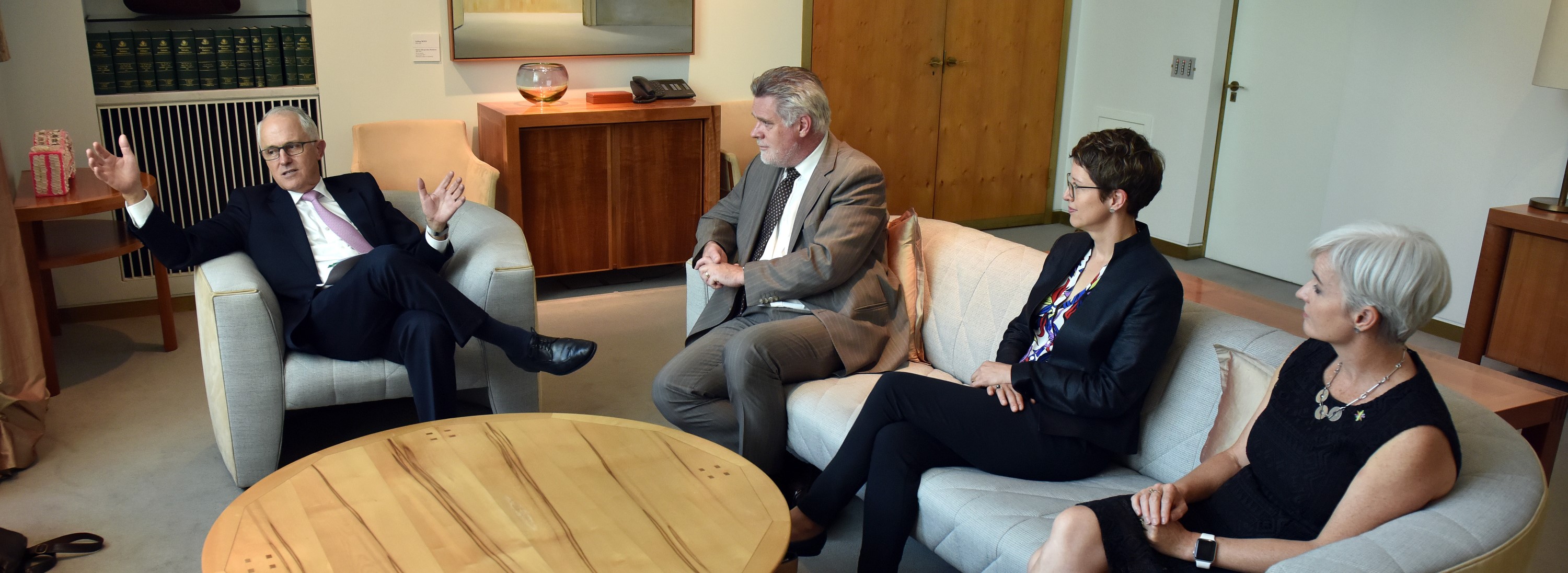
“Science Meets Parliament” conference attendees meet with Prime Minister Malcolm Turnbull in his office at Parliament House, Canberra on 14th February, 2018. PHOTO: MARK GRAHAM
I was invited to attend two meetings with Labour MP’s Madeline King and Maria Vamvakinou, respectively, these meetings went very well and have resulted in an invitation from Maria Vamvakinou to come and discuss these topics when she is back in Melbourne. Throughout the event all the parliamentarians I was able to speak with personally gave me the impression that they do care about science but need a reason to voice a desire for change. I urge each of you to reach out to your local MP and raise the issues of interdisciplinary funding and mental health with them. These issues deeply impact the ability of the Australian science community to undertake the work they do. Their impact is twofold, one affecting the purse strings and the other an insidious and often silent or hidden burden that our friends, colleagues and we ourselves too often bear alone.
Cheers,
Daniel
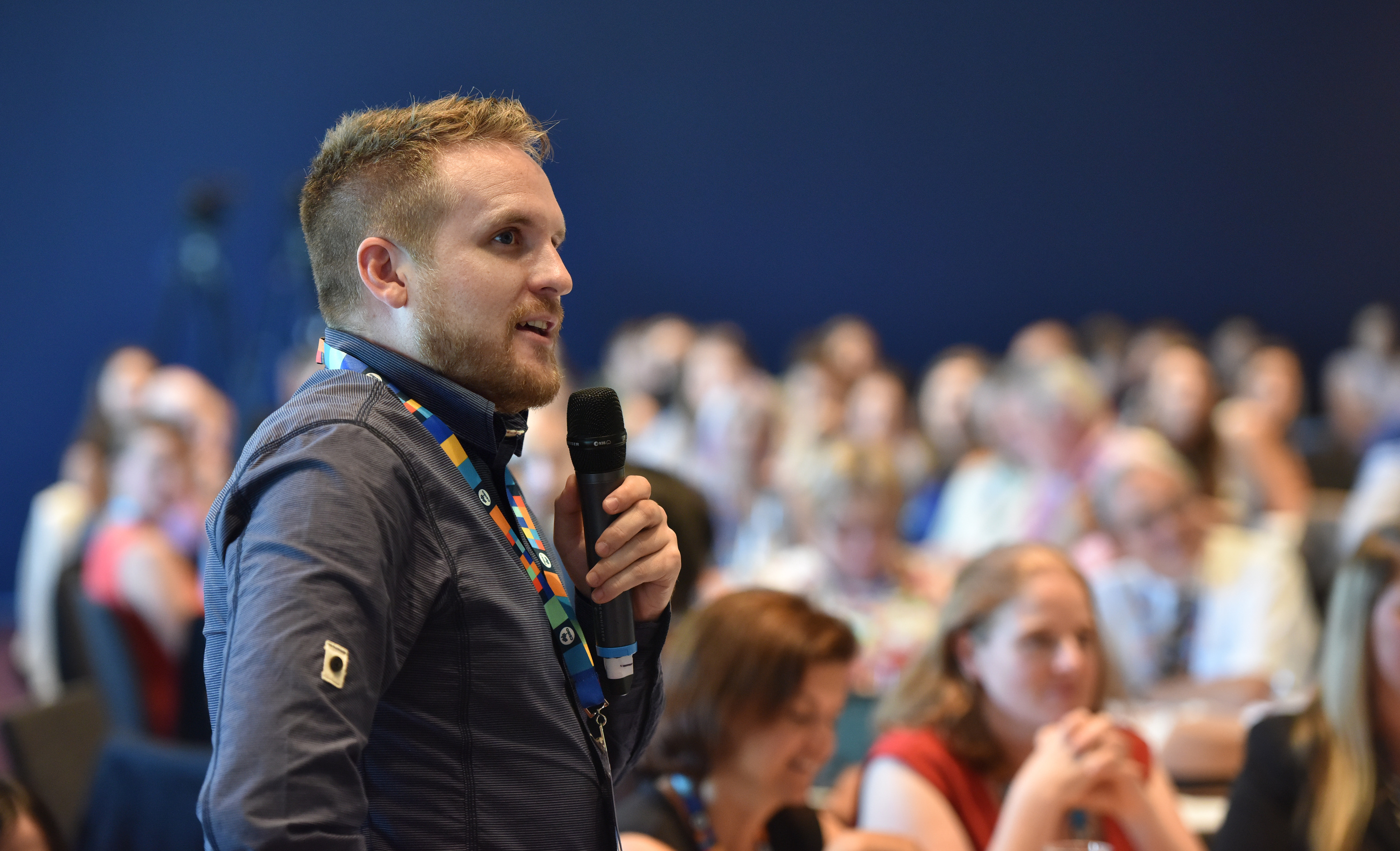
Dr Daniel Langley representing ASBTE at 2018 Science Meets Parliament conference at the National Gallery of Australia, Canberra on 13th February. PHOTO: MARK GRAHAM
 Australian Scientist