The Lies we Want to be Told

There are some lies that we want to hear, we want to be told that we will be safe, that we are the good guys and that our enemies are afraid. This is the truth of human nature, we accept what we want to accept and so often believe what we are told to believe. It is a shame really that we are not more demanding of the truth, but in some cases we want to be lied to.

This topic came to me on a recent trip to the ‘Berlin Unterwelten‘ (Berlin Underworld, which by the way I would recommend to one and all as an excellent activity if ever you are in Berlin). I took the tour 3 which explores the bunkers built for the cold war, one of the disturbing things about the bomb shelters and nuclear bunkers is the sheer impossibility of their operation. What I mean by this is that we visited two bunkers that were constructed to protect Berliners from nuclear fallout as a result of nuclear war between Russia and the USA. At the time west Berlin had a population of 2 million people and the entire network of bunkers constructed could house a measly 0.8% of that. So considering all the men, women and children that would be excluded from the bunkers we can see that these bunkers should offer little hope. To add to this the maximum operation times of the two bunkers were 48 hours and 3 weeks respectively. In reality this would not protect the people from nuclear fallout but merely prolong the inevitable.

Even more astounding in this case were the published material on display, in these it depicts how to survive a nuclear blast, a man stands within sight of the mushroom cloud, he then proceeds to lie on the ground and cover his head with a brief case. This was serious advice provided to the German people on what to do if they saw a nuclear blast. I am sure that both the stories of insufficient bunkers and blatantly flawed survival tips were repeated in the US and Russia alike. It is the truth that these tales highlight which is truly revealing. When the population lives under constant threat, people desire to be told that everything will be alright, that the government will protect them and that even if the world would end tomorrow there would be a chance you could survive.

Living with the pressure of a great threat is hard, justifying doing mundane things like going to work or washing the dishes is difficult when the world as you know it could be over at any time, and so we lie. We lie to ourselves and we lie to each other. The governments world wide lie to their people and the world feels  for a short time like a safer place.

I wonder though whether if the same scenario were to arise now, in the information age whether the propaganda would provide as much comfort. Or would the word spread amongst the masses that we aren’t safe, that the ship is sinking and the designers didn’t build enough life boats.

The question we need to ask ourselves is what do we want to be lied to about, every piece of history comes with a twisted view, that of the writer, the survivor, the victor or the victim. We generate a narrative that forms our view of the world, the stories we are told and the experiences we have form and shape this narrative. We incorporate our family histories and that of our nation. But the stories we accept as truth are never completely true. I am seeing the world through new eyes looking at the history of Berlin as told by Berlin. it is interesting to reconcile the slightly different views of the same events and to form and dissolve at the same time stereotypes of the wider world.

It is ok sometimes to be lied to, sometimes it is necessary and sometimes it is ok to accept those lies.  I think that it is important however to recognise the lies we tell ourselves and the lies we accept so that we do not become blinded to the truth and stuck in our false beliefs. Always test the words you hear and search for the alternate point of view.

Best of luck in the New Year and may 2013 be filled with truth for us all.
Cheers,
Dan
Posted in Language, Life | Tagged , , | 1 Comment

The academic pressure cooker

The life of an academic as it turns out is not the protected sheltered little world that many outsiders perceive. It is sometimes viewed by undergraduate students that professors spend very little time doing actual work, the seem to be constantly absent from their offices and often slow to reply to email. There are of course some exceptions to the rule, some super human professors seem to be awake at all hours, respond instantly to emails whether at midday or midnight. Recent research seems to indicate that in the western world researchers and academics in general work long hours throughout the day and night and continue to work on weekends. The pressure placed on academics to continue to produce research results is growing each year.

Take into account that most professors are also required to teach, write grant proposals and in the Australian system mark large amounts of assessments on top of producing ground breaking research and it’s really no surprise that many of them are hard to track down.

Taking a step back from the Publish or Perish mantra which has certainly infected the US and is spreading globally now, it seems quite clear to me that this is not the environment for creative thinking.

The academic pressure cooker places demands on students and professors alike that are unrealistic and unproductive in many cases. In order to function at a high level researchers need space and time to think develop ideas and validate hypothesis’. In order to reach this kind of operating conditions a researcher must make an active decision to ignore the pressure to publish, publishing too soon results in poor performance and weak articles, if we can resist the temptation to publish as soon as we have the smallest result it is possible to greatly enhance the scientific value of the end product.

To operate in this manner requires courage and persistence as in the initial phase you go through a dry spell of not publishing anything. Hopefully with enough hard work a little luck and by maintaining multiple streams of research the fruits of your labour will pay off with a series of in depth articles that are valued in the scientific community.

This approach is challenging in a world where you next position is not always guaranteed and often appointments are made based on the number of publications you have, but if you look at the great scientists in any field you will see that its the quality of their publications that kick start a good career.

I hope that I can take my own advice and resist the urge to publish early, for the reward of publishing well.

Cheers,
Daniel

Posted in Science | Tagged , , , , | Leave a comment

Science in the air

Science is all around us, I think that many people have a misconception of what science really is. Simply put science is understanding what happens around us, this means that in everything we can see, touch, feel and do there is science to be found within it. From the mathematicians that describe the oscillation of a drum skin using mathematical functions, to the physicist that aims to understand the formation of bubbles in an aerated fluid i.e. milkshake.

Science is not just the hard stuff that the average person doesn’t understand, it is all the things around us, it plays a role in our everyday life and understanding it enables us to do amazing things. I am saddened by the impression that many people have that studying science or doing a PhD is not a ‘real job’, academics and students alike work long hours for little respect in most modern day societies. Students especially are often under appreciated resources that are used and abused as a cheap, free or even paying labour force. In the last years of my pre PhD studies I was paying $2000 for the privilidge of working 8-12 hours a day for 6 weeks.

The thing that cuts deep about this is that society doesn’t often appreciate the work that is being done, I talk with family and friends and they often question my research or the research of other people I know. If they don’t understand what the research is they often are suprised that you can get paid to research in that field. These type questions play a constant role in the evolution and perceived value of scientific research, but what is the intrinsic value of knowledge can you put a price on that?

Whether the knowledge is something that everyone in the general public will be interested in or whether it is an esoteric field that only a handful of people worldwide understand or have an interest in, knowledge is valuable, some would say for knowledge sake but I say that knowledge is valuable for the foundation it provides, for the building materials it gives us and for what may come in the future. Sure at the moment esoteric fields like dark energy may seem irrelevant but in the future when we are using that research to manipulate dark energy for space exploration I am sure people will appreciate the importance of it, unfortunately they probably won’t appreciate the work that was done now.

The hardest thing in science is often knowing where an exploration will lead or knowing what it is we need to know before we find it. The origin of computers rests on semiconductor technology which wasn’t discovered because we needed computers it was discovered because somebody said ‘hmmm that’s interesting’ and then studied the electronic properties of a set of elements. Taking that fundamental research humanity has then developed it into devices that we use in every aspect of our lives, but without that original esoteric set of discoveries computers wouldn’t exist.

So take some joy in life take the time to look around you and see what you can see. Ask why the soap bubble shows a rainbow, why the ripples in that pond look strange and the next time you talk to scientist involved in an esoteric field of research just be thankful that they are doing the hard work and thinking about these problems so you don’t have to.

Cheers,
Daniel

Posted in Science | Tagged , | Leave a comment

The sum of it all

When you stop and think about it really everything in life is the sum of its parts, as one of my favourite bands “The Herd” says “you are the sum of it all”. Everything we do in life adds up to make us the person that we are, ‘The Herd’ pulls together ideas in their track ‘sum of it all’ that discuss the imbalance in modern life that we all face, we are the sum of it all and each and every day we make decisions that make us who we are.

It’s time that people start to ask the question of themselves ‘what is the trade off in your life? What did you pay, what was the price?’ and most importantly was it worth it? We all have dreams and ideas things that give meaning and purpose to our lives, but too often we trade away our dreams to ensure a security in the day to day. Does this lead to the satisfaction that we desire or does the action of compromising erode the core of who we are out from under us? Continual action in this direction appears, in my opinion, to lead to a hollowed out version of ourselves with diminished dreams and goals. This kind of action is encouraged by society as the diminished human is the average human, compromising on your dreams and ideals for the comfort of society leads to a certain uniformity within the community. This is important in some regards as it allows our society to work but in others it results in the loss of the very things that make humanity great.

In science the mantra of the ‘sum of it all’ is just as true, everything I do is the sum of what I know from work that I have done before, the actions and experiments that I do add to the sum of my knowledge and are built on the sum of human knowledge. In order for me to make a useful advance in scientific knowledge I need to take the sum of many experiments and understand the implications of each of them, each experiment is the sum of a series of data points and each data point is derived from the average of a series of repeated measurements. Without the sums involved in this process the results are unreliable and without the complete picture provided by many experiments and many data points the results are uninteresting. Each experiment tells part of a story but it is the sum of it all that leads to the bigger picture. This is the same in life, the actions that you do each day shape and change you to make you the person that you are, we are all the sum of our past. So the question I start to ask myself is do I want these things to be part of who I am? Do I want become what these actions will make me? The question really is what have we paid to get where we are and was it worth the things we had to do along the way?

Tell us what the trade of in your life is and whether you think it was worth it. Let me challenge you that if you don’t think it was to ‘wake up and leg it’ chase after you dreams and grab them with both hands. There are too many people that believe their dreams are out of their reach but the truth of the matter is that we can reach it all you just need to make the right sum of hard work, people and inspiration. So chase after you dreams aim high and let them change as your life goes on, aim to live so that the sum of your life makes you into the person you want to be!

Cheers,
Daniel

Posted in Life, Science | Tagged , , , , | Leave a comment

The power of the brain

The human mind is a wonderful thing, but sometimes it can be our own worst enemy. Henry Ford was certainly right when he said “whether you think you are able to do a thing or not you are right.” I often spend a lot of time thinking about doing something before actually attempting to do it and I find that the mindset in which we approach an activity has a great influence on the outcome. If you are interested in this topic and some of the amazing things that the human brain can do I suggest reading “The Brain that Changes Itself” by Norman Doidge, it is an excellent book and I strongly  recommend it.

The book above is about neuroplasticity and how the human mind can change, grow and adapt to the environment around it and to recover from damage caused to it. It has several amazing stories of human discovery, invention and miraculous tales of recovery that were previously thought to be impossible.

The mind is one of the most important organs, it holds all our conscious thoughts regulates our biological processes and allows us to perform complex tasks. More than this though, the brain holds our identity, we use our minds everyday and the influence that this small grey wrinkly organ has on how our life plays out is not to be under estimated. In terms of our ability to do things I think that our mind is often the dominating factor, we need to find ways to influence and change our mind so it is not a hurdle or resistance to our intended actions. When you think about the body the muscles we use are the ones that get stronger, it is the same in the brain, the sections of our brain that are used the most get stronger and take up more space within the brain. Thought patterns are like pathways cut through the jungle, the more often you walk down them the larger and wider you cut them. This process makes it easy for us to become trapped in the same ways of thinking, sometimes in order to move forward we need to make a mental shift to get us out of those well travelled paths. It is especially important when it comes to attempting or completing difficult tasks, so often we talk ourselves out of trying because in our mind the task is impossible, I usually find though that no task is impossible if you have the right mindset and some people who are willing to help. For me it seems that exercise is a great tool for helping to shift gears.

I decided recently to do an experiment, it was a simple experiment enacted upon myself, a 50 day challenge to do something that was difficult everyday. The challenge consists of climbing to an old fort called the Bastille above the city of Grenoble. So far I am 9 days into my challenge and have completed it everyday and added a few extra challenges along the way. The exercise has been very good for me, I am not really fit at all so each time I go to face my task I end up coated in sweat and struggling to lift my legs by the end of it, to make it worse because of the experiment I have no rest days between the exertion which means my legs are constantly tired. In spite of this I find that after 9 days the task is getting easier, I am unsure whether this is because I am getting fitter or whether having proved to myself that I can do it many times makes the mental challenge smaller.

What I can say is that the affect of a trip to the Bastille on my mental state of being and mindset in general is quite astonishing. If I am feeling lethargic and depressed before heading to the Bastille the combination of exercise and the sense of achievement seems to act as a catalyst for a mental transition. I become much more efficient at work, I cannot empirically say that the exercise is the sole cause of this but the evidence seems to be there. Every time I complete the challenge I finish in a positive mood, it makes me feel like I can do anything, taking that to the lab seems to have a positive influence on whatever task I take on that day. It also seems to have increased my creativity and abstract thinking, although this may just be due to spending an hour a day doing a task that requires no more thought than putting one foot in front of the other, allowing my mind to work freely whilst it has a good blood flow.

The benefits of  a positive approach to any task cannot be ignored but it is crucial to find the tools you need to make that mental shift and keep you mind there. My challenge for you would be to take 50 days and do 1 thing that you have wanted to do for an hour every day. For me it was to get fit but that’s not for everyone, do something that challenges you and will give you a sense of achievement when you complete it each day. Learn a language, musical instrument, get fit or take up yoga whatever you choose to do, challenging yourself helps to maintain a flexible mind and will make you grow.

Leave a comment about what you chose to do.

Cheers,
Daniel

Posted in Genial - It's french for awesome, Life, Science | Tagged , , , , , , , , | 1 Comment

Memory, Technology, and Creativity

I read an interesting blog the other day “So Long Ago I Can’t Remember: Memory, Technology, and Creativity.” It hit straight to the heart of a problem that I have been pondering for several weeks now. Is ‘google’ our friend or is it actually causing an atrophy in the collective  knowledge of humanity. Professor Tracy Denis of the Psychology Department and the Biopsychology and Behavioral Neuroscience Doctoral Program at Hunter College, The City University of New York provides some great insights into the way that we handle information in the modern age.

Gone are the days when students had to know everything by heart, when the in depth knowledge of a field was linked to how successful a person could be. These days we have discussions that don’t end with a conclusion but with the phrase ‘google it’.

I worry sometimes that the information age is actually an information overload that leads to the externalisation of information. In principle humanity knows more now than it ever has in history, the information is readily accessible around the world at any time.  I think though that the depth of knowledge that used to be carried by an individual is shifting as well, leading to more people knowing less and relying more on the collective knowledge of the internet. It seems like the average person knows less and less each year and is more and more reliant on their electronic device and the internet to provide information. I have several friends that cannot go anywhere without their GPS.

I am not sure whether this is the truth or just my perspective as a young scientist, working in my field I come across many different people but the ones that always amaze me are the old professors that just seem to know everything, I wonder sometimes if I will ever be like that. I worry now that the easy access of information reduces the necessity of my mind to store it, will we become entirely dependant on the devices around us to store our information and analyse it for us? This has been something that has been on my mind for quite some time now but I am beginning to see a glimmer of hope, when reading a new article or looking at the research of another Phd student some parts of research that I have done in the past or articles I have read come back to me. It is amazing how the human brain works, inside our minds we capture so much more information than we are consciously aware of. I think that there is definitely a balance here, that the information ages is beginning to reach, in which the information we store locally in our minds acts as a reference library to direct us where to find the in depth information that is stored online or in our electronic devices.

This will be a dynamic shift from the way that people stored and handled information in the past. Allowing one individual to be an expert in many fields by having an efficient method for referencing their information, this is a stark transition from the old method where one individual knew one field with a great depth but was often less capable in unrelated fields. I do not know whether this will be an advantage or a disadvantage in the scientific process but I am sure we will find out over the next few decades.

One limitation of this approach is the impact on creativity that knowledge externalisation will lead to. I think that it is very important for us to internalise the information that we interact with, this process enables creativity. Taking two separate concepts and linking them together in a new way is the essence of creativity but if we don’t have the individual concepts firmly in our minds it becomes difficult to interconnect them. I hope that as we move to a decentralised knowledge base where complete understanding of a topic is provided online but not necessarily kept in the heads of individuals that we don’t end up stifling our creativity.

In the end I believe the ease of access to information isn’t degrading the collective knowledge of humanity but it is definitely shifting it, whether this is good or bad only time will tell.

Cheers,
Daniel

Posted in Life, Science | Tagged , , , , , , | Leave a comment

The recipe of good science

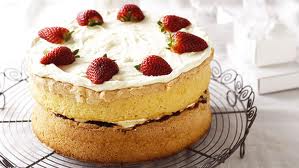
The cake of life

The recipe for good science is the same as the recipe for a good life:

Ingredients for cake of life:
    • People (Friends/Family/Colleagues/Competitors)
    • Hard work
    • Rest
    • Luck
Ingredients for the icing:
  • Honesty
  • Inspiration
  • Purpose
  • Love
  • Persistence
  • Courage
  • Passion

All ingredients should be combined in roughly equal measures, too much or too little of any one of these ingredients can spoil the whole cake as many of us have found out from experience.

In life we can have just the cake, the first set of ingredients, but this is pretty plain and dry. Just like with real cakes so often it is the icing that makes the dish. I strongly believe that with the ingredients for your icing listed here you can have a successful and enjoyable life!

The cake of life cannot exist without people in it, your family and friends play such a large role in shaping the person that you are and the person you will become. Don’t underestimate the role that people play in your life, often it is not until much later in life that you can look back and see what the people around you actually did for you. Life is not always easy but with hard work most tasks can be completed. Rest is often ignored but is so integral to a happy and balanced life, without rest every task becomes harder. Take some time to look after yourself and you will find that you become more productive in the times that you are working. As with all things chance can play a role in life and science, some people say there is no such thing as luck, others depend upon it. In reality we all make our own luck, how we respond to the situations that occur around us often determines the nature of the outcome in the end. “Whether you think you can do a thing or think that you cannot you are right” (Henry Ford). So I take the view that most things are possible with the right people, hard work and rest.

In the end though these things only take us so far I believe that the icing of the cake is what allows a person to do anything, Honesty, Inspiration, Purpose, Love, Persistence, Courage and Passion are what make a person stand above the crowd, these are the ingredients that make history in the men and women that have them. So add a dash of spice to your life find what inspires you, what you are passionate about, what you love and go after it with courage and integrity. These ingredients make life worth living and can be on a grand scale or in everyday life.

Share with us what your passion is what makes life worth living for you, and the next time you are feeling down and out, track down the people in your life that make the cake…

Cheers,
Daniel

Posted in Life, Science | Tagged , | Leave a comment

Science ain’t what it used to be!

My father always tells stories of back in his day, we all know the type of story I am talking about. Reminiscing of the good old days when things were better. This post is one of those stories, the only difference is that the good old days were 20-30 years before I was born.

I look at the state of Scientific communication today and realise that like so much of the modern world it is becoming hollow and empty. In the past products were built to last and designed to endure the test of time, they were made of good materials and incorporated all the necessary parts. Gone are the days where you could only buy one type of ice cream scoop and it was made of solid metal, that scoop would last a lifetime, literally my grandma still has hers from the 1950’s. Now days, you can by many different scoops with new and improved methods of extracting ice cream, they fight to be the cheapest, fastest, strongest and fanciest. The products of the modern world are mostly like this fighting to be cheap and fancy but in the end almost all of them are made from poor quality materials and are realistically designed to break.

Scientific writing is becoming like these products more and more each year, quality materials are being replaced with inferior and the instruction manuals don’t actually contain the necessary information to make it work like it does on TV.

I am referring to Science journal articles and the ‘Literature’ in general, when I look at articles written at the beginning of the 20th century I see articles that describe in great detail how an experiment was performed, why it was performed and what the result was. Typically these papers also include theoretical models and equations of some kind to support the experimental data. At this point in history it appears that the ‘Literature’ was working in the way it was intended, one scientist publishes the results he has found and his interpretation of them. Other scientists would read the article reproduce the experiment and agree or disagree with the conclusions of the previous writer and then extend the experiments, with each article building on the knowledge produced in the article before it.

Unfortunately these days this is often not the case, many of the articles published are fluff pieces that provide a taste of what can be achieved but don’t explain how it was done or how it works. There are of course exceptions to this rule, thankfully otherwise the entire scientific endeavour would be pointless, but the majority of work appears to have fallen victim of the ‘publish or perish’ mindset that is so similar to the driving force behind cheap quality products.

I am saddened by the current state of scientific writing, many scientific articles are not even worth the paper they are printed on, incorporating some pretty pictures but no real new information. Too often I read an article that has been published in a peer reviewed journal that has glaring errors in the interpretation, provides no novel information, describes experimental conditions poorly or worst of all, all of the above. Currently it appears that scientists around the world are afraid to share their experiments completely because they worry that others will beat them to an interesting discovery. Instead of each publication building on the ones before it and the experiments progressing in large steps, the science of today often progresses with smaller steps than the pile of articles written about it.

The slow rate of progress and high rate of publication work together to further degrade the rate of advance in science. Since there are so many articles in the literature it becomes difficult for people to find the insightful and useful ones. Each bad publication reduces the chance that somebody will be able to take the next step forward in the line of investigation. If the ideas presented in a paper are not challenging or inspiring people will not rise to find the solution or application. Instead scientists should aim not to publish indiscriminately but only to publish when the experiments have true merit. Papers should be published only if they provide a depth of understanding that allows a solid foundation for the next steps in the investigation. One exception to this idea would be papers that demonstrated unexplained results and invited other scientists to provide an explanation.

I long for the good old days when science was science and journals were about how valuable the information in them was not how much money could be made. When scientists didn’t cry ‘publish or perish’ and print garbage in an attempt to gain funding. When one scientists discoveries provided a foothold for the next researcher to step on and we were not trying to make loose grips so that others would fall while our research continued.

In the end the Science literature should be aiming to build the body of knowledge, with each article published providing a firm foundation for the next step in the investigation, scientists should consider what they publish more carefully and the editors of Journals should place more value on the quality of the material rather than dollar value that many articles brings.

So the next time you go to publish an article ask yourself is it really worth it or are you just publishing to serve your own purpose?

Cheers,
Daniel

Posted in Science | Tagged , , , | Leave a comment

The ‘Free energy’ obsession

The ‘E-cat’ was a recent device that caught quite a bit of attention online. Like most ‘cold fusion’ devices eventually do this one appears to be turning sour. Invented by Andrea Rossi the E-cat was described as an energy producing device that operates on the cold fusion of Cu and Hydrogen atoms.

I am not going to talk in too much detail regarding the ‘E-cat’ but would like to spend more time talking about the phenomena that surrounds ‘cold fusion’ devices and more generally free energy (perpetual motion, magnet powered motors etc).

The only comment I will make about the ‘E-cat’ is that if you do create a cold fusion device and decide to try to market it, make sure your addition is correct…

Humanity is fascinated by the idea of ‘free energy’ and rightly so. There are two sides to this fascination, on one side we have the inventors and on the other we have the general public. The inventors obsession is driven by one of the following motivations:

A. If I can make ‘free energy’ I can become rich and famous.
B. If I can make ‘free energy’ I can save the world.
C. Science is my life.

Unfortunately for humanity so far most of the claimed discoveries of cold fusion have fallen into category A. People from this category are often self serving con artists or delusional scientists led down the rabbit hole by subconsciously misinterpreting data.

People from category B tend to be chasing the dream without understanding the science, they try to drive the research from outside and place pressure on scientists to work in this field but often don’t have the understanding themselves. Sometimes category B people make wild claims hoping that scientists will try to disprove them but instead succeed in creating a free energy source. So far this hasn’t happened.

Category C people are the real scientists researching energy production for the sake of science and nothing else, sadly most of the time these people don’t take cold fusion or free energy seriously.

Don’t get me wrong, some scientists have made claims of cold fusion based solely on the hard data resulting from their experiments, but then later realised or been shown their experimental errors or error in interpretation and retracted the claim.

The really sad thing is that the idea of any sort of cold fusion or free energy has become Taboo in the scientific world. People who make these claims are almost instantly branded as crackpots, charlatans or liars. I take a different view, we should try to see all science objectively, simply because it won’t work under the physical laws we know right now doesn’t necessarily mean that it won’t work. This has been shown throughout history, as our understanding of the nature of atoms has improved so too has the complexity of the theories we use to define it. The emergence of quantum mechanics in the early 20th century is an excellent example of this, people observed experimental phenomena that could not be explained by the science of the time so the developed new approaches to explain them. This was met with great resistance in the scientific community but has now become the accepted model for atomic scale systems.

Science has proven itself wrong many times in the past and the knowledge that something is true doesn’t always mean that it is, Galileo taught us that. Claims of cold fusion and free energy should be approached with careful but open scepticism, we should aim to determine whether the claim is accurate without automatically assuming that it isn’t.

Unfortunately with the invention of the internet people can make whatever claims they like and project them to a large audience without validation or restriction. The sheer number of people making these claims makes it very hard for mainstream scientists to respond to each one carefully and thoroughly. This has led to the current situation, where government funding for these types of projects is gone and any scientist making a claim that seems too good to be true is, more often than not, shunned and rejected without due process. This leads to all of the fake claims being dealt with swiftly, but if ever there were to be a legitimate claim it would fall on deaf ears.

On the other side of the fascination is the general populace. Humanity as a whole often pins its hope on one thing that could ‘fix’ or ‘save’ the world. For many people cold fusion is that saviour. If only we could generate cheap clean energy we could cure all the ails of the world.

In one sense this naive idea is actually true, many of the wars fought in this world are for energy, much of the pollution is created by energy production and almost all processes in the modern world involve the use of large amounts of energy. If we could produce an abundant source of clean cheap energy we could replace all of these things and work towards a better future. However in reality this probably won’t work, sadly we are too greedy and selfish as a race to share the spoils of such an energy source.

The nature of the public’s fixation on these free energy ideas as a saviour is what makes exploiting them so attractive to the charlatans and liars. People dream of such a solution and if you appear able to provide it they will pay for it. Many people throughout history have tried to profit from the idea of free energy and each attempt is met with a mixed response of scorn and acceptance from the public. If we could rid society of the parasites that milk the desires of the masses for money perhaps we could focus on working together to solve some of the large issues of our times.

In the end science wins, this is a view that holds true for me. I see that the slow and argumentative nature of the scientific community in its current form works together to determine the truth eventually. In the end the truth always comes out and science wins.

Leave your opinion on the way science deals with free energy, or your views on the public fascination below. Thanks for reading and the next time you hear about free energy don’t accept or exclude it out of hand.

Cheers,
Daniel

Posted in Science | Tagged , , , , , | Leave a comment

Hello World

Introduction

This is my first venture into online writing and I am unsure as I step forth into these untested waters. I wonder whether my random ramblings will attract a readership or whether they like so much on the Internet these days will go unread, locked away as lonely ones and zeros on a server somewhere only to be accessed by spiderbots and trawlers searching for email addresses.

Regardless of the truth of the matter I believe that these ramblings shall serve a purpose, though I probably tell myself this because I am optimistic by nature. Nevertheless I shall write these posts for my own sanity and if you read them and enjoy then so much the better!

It’s fitting I find that the automatically generated post that started my new blog was a tribute to one of the most well known programming traditions, good to see that someone has a sense of humour. In keeping with that good humour I chose to leave the title as ‘Hello World’

This blog will serve as an outlet for the observations I make on science, life language and the world in general. Though there will be a few personal touches that will pop up from time to time the body of this space will be anecdotes and observations of life.

If you would like to request a post feel free to email me at  aussiescientist(@)gmail.com I can’t promise to answer all requests but if your query catches my interest I will do some research and write an article about it.

Content will be regularly updated on the 1st of each month so if you enjoy the posts please check back then to see new material. The first science related article will be on the ‘free energy’ obsession and will be released on the 14th of June 2012. Other posts may appear as inspired but I will ensure that new material is loaded at the beginning of each month.

Enjoy,
Daniel

Posted in Introduction | Tagged | Leave a comment